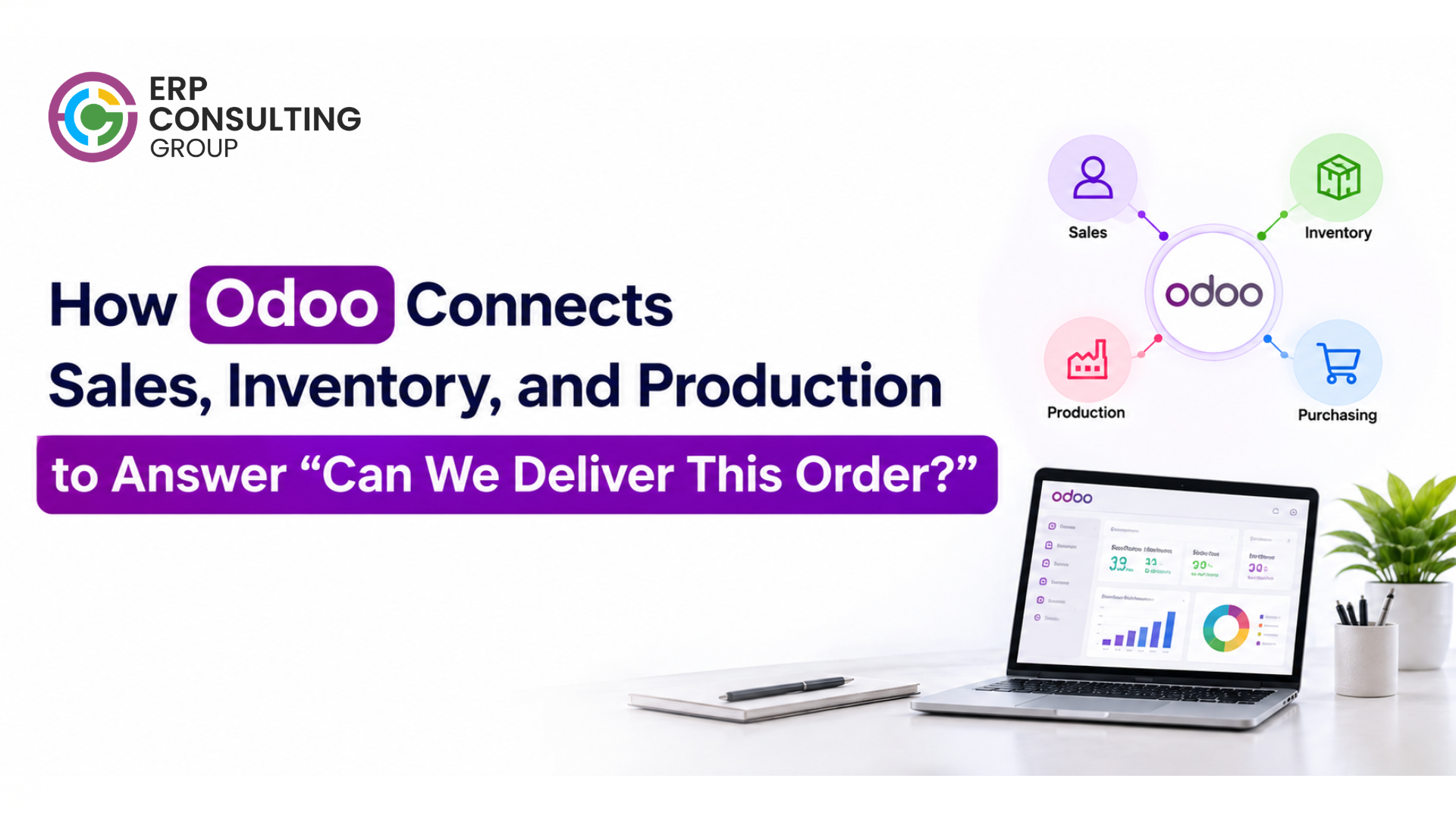
 Inside a connected Odoo manufacturing process - from customer order to delivery date.
A customer places an order and asks a simple question: “When can you deliver it?”
For a manufacturing business, answering that question can involve much more than checking a calendar. Sales needs to understand the customer’s requirement. Production needs to know what is already scheduled. Inventory needs to confirm material availability. Purchasing may need to check incoming supplies. Management may want to understand whether the order can be completed profitably and on time.
At ERP Consulting Group, we work with manufacturers who run into this exact moment - not because they lack information, but because that information sits in different places and doesn’t reach the right person in time. This blog looks at what a genuinely connected process looks like inside Odoo, and where implementation - not just installation - makes the difference.
The Delivery Date Is Not Just a Sales Decision
It’s easy to think of the delivery date as something sales decides with the customer. But a realistic delivery commitment depends on what is happening across the business.
A new order for 500 units comes in, with the customer expecting delivery within the agreed timeframe. At first, it looks manageable. Then production checks the schedule and finds most of the available capacity already committed. Inventory has most of the required material, but not all of it. Purchasing knows the missing material was ordered - but the supplier has delayed delivery.
No single department necessarily made a mistake. The problem is that each one was looking at one part of the same decision.
What a Connected Process Actually Looks Like in Odoo
This is the part that matters most, and it’s where a lot of ERP conversations stay too abstract. In a properly configured Odoo environment, a single sales order sets off a connected sequence - not five separate lookups:
1. Sales Order Confirmed
The order enters Odoo’s Sales module with the requested quantity and delivery date.
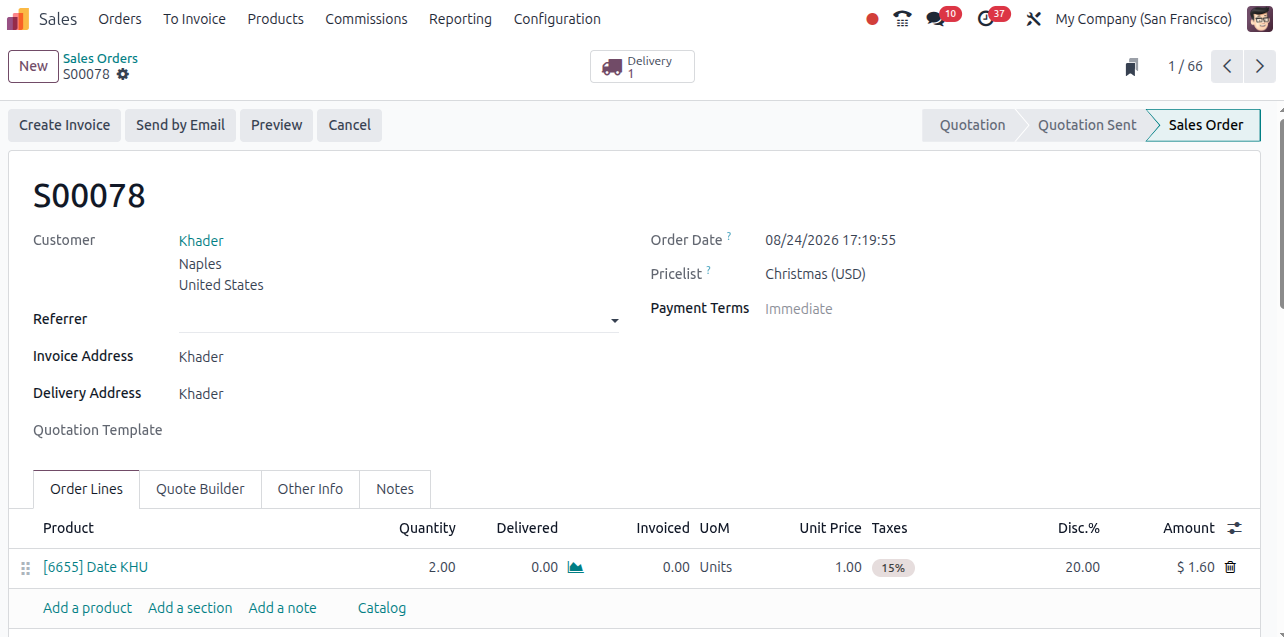
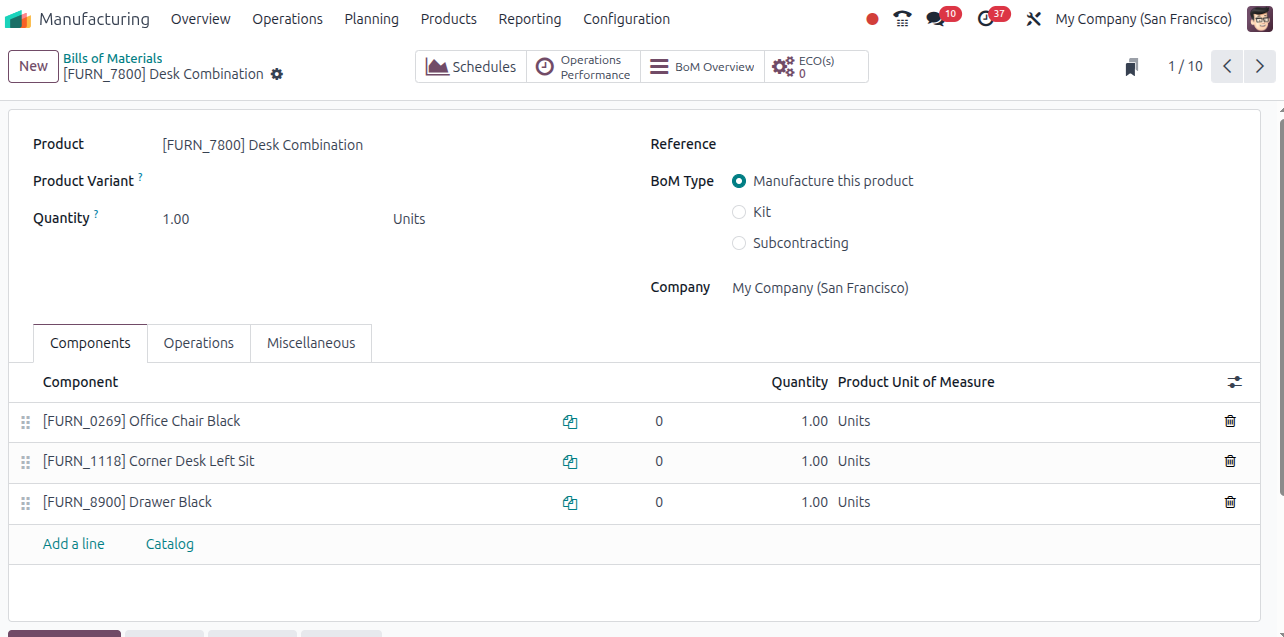
2. Availability Checked Automatically
Odoo checks the Bill of Materials against real, uncommitted stock in Inventory - not just “total stock,” but what’s actually free to allocate.
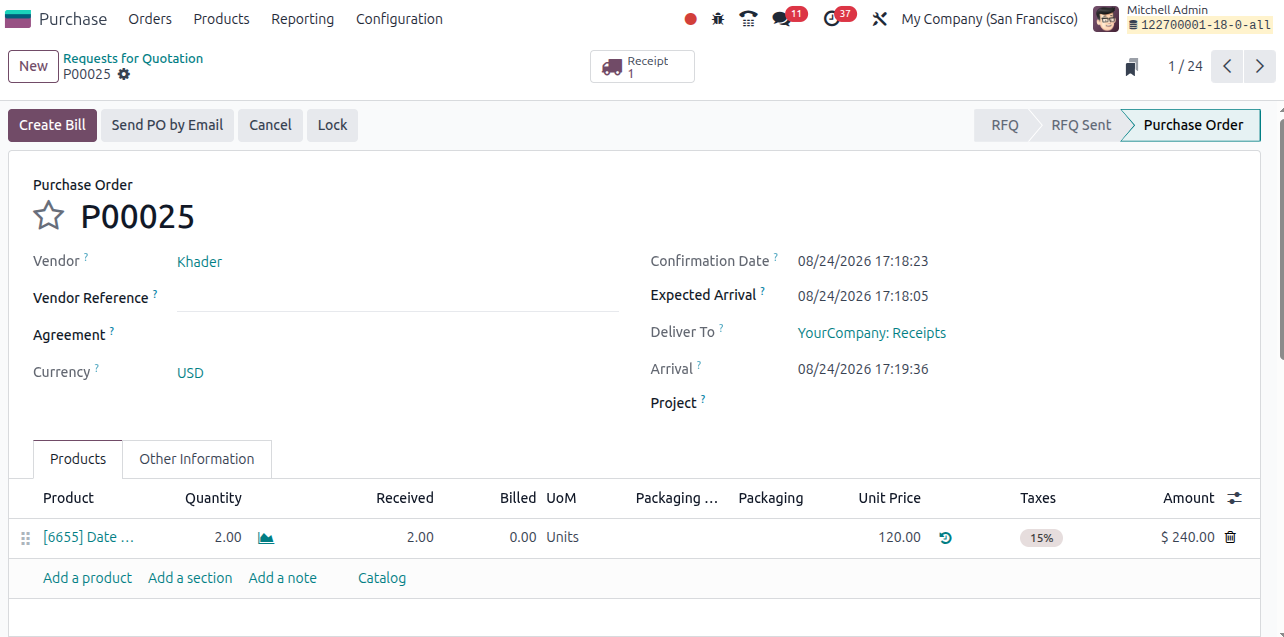
3. Shortages Trigger Purchasing
If material is short, a purchase request is generated automatically in the Purchase module, tied to the specific order that needs it - not discovered later by someone checking a spreadsheet.
4. Manufacturing Orders Scheduled Against Real Capacity
Production orders are scheduled against actual work center capacity in the Manufacturing module, so the plan reflects what the shop floor can realistically absorb, not just what looks free on paper.
5. A Realistic Delivery Date Flows Back to Sales
Before the order is confirmed to the customer, Odoo can surface the earliest realistic date based on material, capacity, and any supplier delays - so the promise is made with the full picture, not one department’s slice of it.
The point isn’t that software makes the decision. It’s that everyone making the decision - sales, planning, purchasing - is looking at the same live information at the same time.
Why Implementation Matters More Than the Software
An ERP system does not automatically fix a disconnected manufacturing process. Before configuring Odoo, the business needs to understand how the process actually works:
- How does a customer order enter the business, and who confirms the delivery date?
- How is production capacity checked today?
- When does a material requirement become a purchase, and who owns that decision?
- What happens when a supplier is delayed?
- How is the actual cost of an order understood - and by whom?
These questions shape what the system needs to support. The objective isn’t to force a manufacturing business into a generic software process - it’s to understand how the business actually operates and configure Odoo around that.
For a solar equipment manufacturer, working through these questions before configuration - not after - led to an 86% cut in dispatch cycle time. Read the full case study: How ERP Consulting Group Unified Manufacturing, Sales, and Warranty Management for a Solar Energy Manufacturer → |
The Information Is Only Useful If People Trust It
A connected system only works when the information inside it is reliable. If stock quantities aren’t updated properly, inventory visibility becomes questionable. If production data isn’t maintained, capacity planning becomes less useful. And if employees keep separate spreadsheets because they don’t trust the system, the business ends up right back where it started - with multiple versions of the same information.
Implementation isn’t only about configuration. It also involves processes, responsibilities, and how people actually use the system day to day.
A Simple Way to Assess Your Own Process
You don’t need a large ERP discussion to start. Choose one real order - ideally one that was complicated, delayed, or required several follow-ups - and trace it:

Customer Order → Planning → Materials → Purchasing → Production → Delivery
At each stage, ask where the information came from, who had to confirm it, whether another spreadsheet or system was needed, and whether the delivery commitment changed along the way. This exercise tends to reveal that the biggest gap isn’t inside one department - it’s in the space between departments.
From “Let Me Check” to a Confident Answer
For a manufacturing business, an ERP should ultimately help people make better decisions - not just replace spreadsheets or add a dashboard. The real question is whether the business can answer its most important operational questions with confidence, including the simplest one: “Can we deliver this order?”
When demand, materials, purchasing, capacity, and production are connected, that question becomes easier to answer before a promise is made to the customer. That means fewer surprises, better planning, and more confidence across the business.
Ready to Look at Your Manufacturing Process Differently?
If answering “Can we deliver this order?” still requires several systems, spreadsheets, or people to confirm the answer, it’s worth looking at where those information gaps are coming from.
ERP Consulting Group helps manufacturing businesses with Odoo Implementation Services around their actual operational processes - starting with the decisions, not the software.
Explore Our Odoo Implementation Services
 Recent Posts

 Free Consultation